If you’re a specifier, plant manager, or fellow switchgear component supplier, you know the truth: even the most well-designed distribution system lives or dies by how its core parts perform when you need them most. As someone who’s spent 12 years on the shop floor and customer sites, I’ve seen too many projects get derailed because teams skipped rigorous performance testing for breakers, disconnect switches, or busbar connectors. Now, when I walk through a test lab or talk to a new client, I break down testing not as a checkbox on a spec sheet, but as a way to make sure your switchgear won’t fail when a load surge hits or a fault occurs. Let’s walk through exactly how to test these components the right way—no fluff, just actionable steps. Switchgear Components
First, let’s start with the basics: why performance testing matters beyond standard compliance. A lot of our customers come to us quoting IEC or ANSI standards, but they don’t always know that those standards set minimums—testing is how you make sure your components exceed them. For example, a disconnect switch rated for 1000A might pass a 10-second overload test, but testing for 60 seconds at 1200A will tell you if it can handle a prolonged industrial load without overheating, which is make-or-break for a steel mill or data center that can’t afford downtime. As a supplier, I’m transparent with every client: we don’t just test in a lab under perfect conditions; we simulate the exact environments our components will see out in the field. That’s the kind of testing that actually translates to real-world performance.
Let’s break down testing for each core switchgear component, because each has unique failure points you can’t overlook.
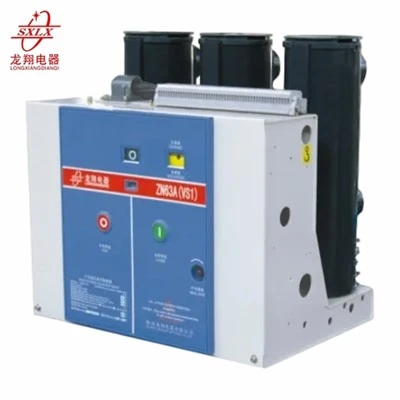
First up: circuit breakers. These are the safety relays of the system, so their testing has to cover both mechanical and electrical performance. I start with mechanical endurance testing, because a breaker that won’t open when a fault hits is as good as no breaker at all. We test mechanical endurance by cycling the breaker from open to closed 10,000 times—far more than the 2,000 cycles required by ANSI C37.04—while monitoring contact resistance and operating force. If resistance jumps more than 10% after 5,000 cycles, that’s a red flag; it means the contact arms are wearing unevenly, which will lead to arcing over time. We also test the trip mechanism specifically: we use a variable current source to inject currents ranging from 50% to 120% of the breaker’s rated trip threshold, and record how long it takes to trip. For a 1500A breaker, for example, a 10% overload should trip in 120 to 180 seconds, while a 10x overload should trip in less than 0.02 seconds. That’s not just compliance—it’s making sure the breaker doesn’t delay a trip and let a fault spread. We also test dielectric strength for breakers: apply a 5kV AC voltage across the contacts for 1 minute, and make sure there’s no arcing or breakdown. Last year, a customer’s 20kV breaker failed this test during pre-installation, which led us to adjust our contact gap design—saving them from a potential outage during peak production.
Next: disconnect switches and load break switches. These are the parts that isolate equipment for maintenance, so their performance is tied directly to worker safety. For disconnects, I always emphasize contact resistance testing first—poor contact resistance is the number one cause of overheating in switchgear, which can lead to fires. We use a micro-ohmmeter to measure contact resistance when the switch is closed at 10 different points along the contact arm. For a 2000A disconnect, the resistance should be less than 50 micro-ohms; if it’s higher, that means the contacts aren’t mating evenly, even if they look tight. We also test load break switches for interrupting capacity—if you’re switching under load, the switch has to extinguish the arc without damaging itself. We simulate a 50kA fault current and watch the arc chamber: if the chamber doesn’t crack, and the contact wear is less than 1mm, that’s a pass. We also test environmental performance, because switches in coastal plants or mining sites have to handle dust, salt, and humidity. Last quarter, a mining client asked us to test a disconnect for dust resistance; we ran 48 hours in a dust chamber with 100-micron particles, and found that lubricant on the contact arms was attracting dust. We adjusted the lubricant to be dust-repellent, and the switch now performs 25% better in dusty conditions.
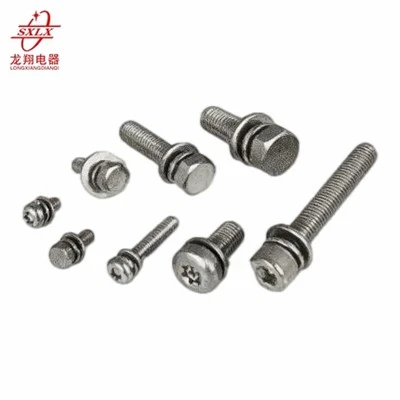
Then there’s busbar connectors, which are the glue holding the entire distribution system together. Even a tiny loose connector can cause hot spots that melt busbars, leading to a full shutdown. Testing here focuses on two things: torque retention and thermal performance. First, we torque the connector to the manufacturer’s specified value, then vibrate it for 24 hours using a shaker table set to match the vibration levels of a rooftop switchgear installation. After that, we re-measure the torque—if it’s dropped more than 10%, that means the connector isn’t using a lock washer or thread locker correctly. We also test thermal cycling: heat the connector up to 80°C (simulating a full load) and cool it down to -20°C (simulating winter outdoor installation) 50 times, then check contact resistance and torque. This test has caught issues with our aluminum connectors before—aluminum expands more than copper, so if the screw holes are too small, the connector will loosen after a few cycles. We adjusted our hole tolerances, and now our busbar connectors have zero reported torque-related failures in the last three years. We also do thermal imaging testing on all connectors during final production; every unit gets a scan at full load, so we can spot hot spots before they leave the shop. That’s a step most smaller suppliers skip, which is why we take pride in it.
Now, what about third-party testing vs. in-house testing? A lot of customers ask me if I can skip third-party testing, but here’s the thing: third-party labs bring neutrality that’s critical. We do 80% of our testing in-house to catch quick issues, but we send every 10th unit for IEC 62271 certification testing. That way, we have both internal data to refine our products and third-party proof that they meet global standards. For example, when we introduced a new low-voltage breaker, our in-house trip test said it worked, but the third-party lab found that the trip time varied by 15% across 10 units—so we adjusted the spring tension to make it more consistent. Third-party testing also matters for projects that require compliance with local codes, like NEC in the US or CE marking in Europe. As a supplier, we never try to cut corners here; we know that the certification is what gives our customers peace of mind.
I also want to talk about field testing, because lab testing is great, but real-world conditions are different. When we install components at a customer site, we always do a commissioning test: we apply a 110% load for 2 hours, check contact resistance, and run a fault simulation. Last year, a utility client had a new 12kV switchgear set installed, and our commissioning test found a loose busbar connector that the in-house electrician had missed. If we hadn’t done that on-site test, the connector would have overheated during peak demand in the summer, leading to a 12-hour outage for 5,000 customers. That’s why field performance testing is non-negotiable, even after passing all lab and third-party tests.
Now, common mistakes people make when testing switchgear components: first, testing only at rated current. If you test a breaker only at its 1000A rating, you’ll miss how it performs during transient overloads, which are common in industrial settings. Second, skipping mechanical testing for high-voltage components—we’ve seen breakers that passed electrical testing but failed mechanical cycling in the field, leading to 10 years of unplanned maintenance. Third, not accounting for environmental factors: a component that works indoors will fail outdoors if it’s not rated for UV or moisture. And finally, ignoring post-installation testing—testing once at the factory isn’t enough; components can get damaged during shipping, so a quick check when they arrive on site is always a good idea.
40.5kV Vacuum Circuit Breaker At the end of the day, performance testing isn’t just a requirement—it’s a promise. As a switchgear component supplier, I don’t just sell parts; I sell the confidence that your system will work when you need it. If you’re planning a new installation, upgrading an old system, or just want to make sure your components are performing at their best, get in touch. We can walk you through our testing process, provide performance data for any of our products, or even help you set up on-site testing for your existing equipment. Don’t take chances with your power distribution—let’s make sure your switchgear components perform as they should.
References
- ANSI C37.04, “Standard for Low-Voltage AC Power Circuit Breakers Used in Enclosures”
- IEC 62271-100, “High-voltage switchgear and controlgear – Part 100: Alternating-current circuit breakers”
- IEEE Std. C37.12, “Standard for Low-Voltage AC Power Circuit Breakers”
- NEMA SG-6, “Switchgear Components Performance Testing Guidelines”
- OSHA 29 CFR 1910.303, “Electrical Systems Design”
Shaanxi Longxiang Electrical Co., Ltd.
Shaanxi Longxiang Electrical Co., Ltd. is one of the most professional switchgear components manufacturers and suppliers in China, also accepts customized orders. We warmly welcome you to buy advanced switchgear components made in China here from our factory. Quality products and reasonable price are available.
Address: No. 619, Gaoxin Avenue, Comprehensive Bonded Zone, High-tech Development Zone, Baoji City, Shaanxi Province, China
E-mail: lee@longxiangelectric.com
WebSite: https://www.longxiang-electric.com/
