If you’re involved in low-voltage electrical distribution systems, you’ve likely stumbled across the abbreviation “ACB” in spec sheets, project blueprints, or supplier catalogs. But unless you’re deep in the industry, it’s easy to mix it up with other similar terms—especially when everyone’s using shorthand to save time. As someone who’s been supplying ACBs for over 12 years, I’ve lost count of how many times I’ve gotten calls from contractors or plant managers asking, “Is ACB the same as MCCB? Or VCB? What even is the difference, and which one do I actually need for my project?” ACB
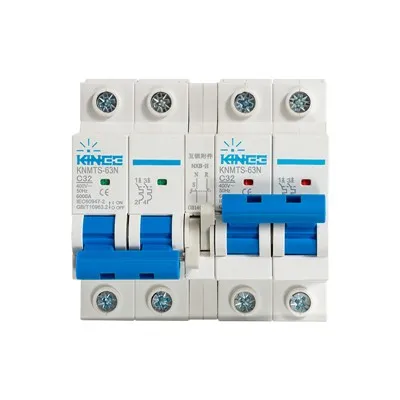
Let’s start with the basics so you can stop guessing and start making the right choices. First, what does ACB stand for? Air Circuit Breaker. It’s a low-voltage, manually or electrically operated device that interrupts fault currents using air as the arc-quenching medium, housed in a sealed air-filled compartment. That core definition sets it apart from other abbreviations, but the confusion comes from how often these other breakers get lumped together in casual conversation. Let’s break down the most common ones people mix up with ACBs, and clear up the key differences that matter for your work.
First up, MCCB—Molded Case Circuit Breaker. This is probably the most frequent mix-up, and I get it: both are low-voltage circuit breakers used in distribution panels, motor control centers, and industrial setups. But the physical design is where the lines are drawn. An MCCB has its entire mechanism enclosed in a molded plastic case—hence the name. That plastic casing is rated to handle lower fault currents, usually up to around 100 kA, and they’re designed for fixed mounting in small, compact panels. ACBs, on the other hand, have an open air chamber (hence “air circuit breaker”) that lets you add or upgrade accessories like shunt trips, undervoltage releases, and communication modules way easier. I’ve seen a client try to retrofit an MCCB with a remote monitoring module last year—they had to drill through the plastic casing, which compromised its integrity, whereas an ACB takes 15 minutes to swap out a accessory module without tools. That’s a practical difference that translates to downtime costs for plants.
Another big one people ask about is VCB—Vacuum Circuit Breaker. The name here gives the game away: vacuum, not air, is used to quench the arc. VCBs are high-voltage, mostly used in medium- and high-voltage applications (1 kV to 36 kV, sometimes higher) for substations, transformers, and grid distribution. ACBs are strictly low-voltage, usually 1 kV or less, so they’re not interchangeable. I once had an engineer order an ACB for a 10 kV substation upgrade—they’d mixed up the shorthand in their spec document, and by the time I caught it, the unit was already shipped, costing the client an extra day in transit and rework. That’s a classic example of how misusing these abbreviations causes headaches.
Then there’s SF6 Circuit Breaker, another medium-voltage breaker that uses sulfur hexafluoride gas as the arc-quenching medium. Unlike ACBs’ air, SF6 is an electrical insulator that’s way more efficient at interrupting high currents, making it a staple in utility grids. ACBs can’t handle the high fault currents that SF6 breakers are designed for, and they don’t have the sealed gas compartments needed for outdoor medium-voltage environments.
Now, let’s dive into the practical use cases where ACBs shine, because that’s where the “why does this matter?” question gets answered. ACBs are workhorses for industrial facilities, commercial buildings, and power distribution systems where flexibility and scalability are key. Unlike MCCBs, which are often discarded when their rating needs change, ACBs can be easily withdrawn from their mounting (they’re draw-out type, not fixed) to test, service, or upgrade without shutting down the entire distribution bus. That’s a huge deal for facilities that can’t afford unplanned downtime—like manufacturing plants with assembly lines that run 24/7, or data centers that need uninterrupted power.
A common mistake I see new contractors make is reaching for an MCCB just because it’s cheaper upfront. But over time, the hidden costs add up. Let’s say a factory needs to expand its motor load: an ACB can have its current rating upgraded or a communication module added to track power usage for just a few hundred dollars. An MCCB would need to be scrapped and replaced, costing thousands plus installation labor. On top of that, ACBs have higher interrupting ratings than most standard MCCBs—we supply ACBs with ratings up to 200 kA, which is critical for large industrial setups where fault currents can spike unexpectedly.
Another area of confusion is between ACBs and the breakers used in residential homes—those are typically MCBs, Miniature Circuit Breakers. MCBs are for low-current, residential applications, rated up to 125 A, and they’re designed to protect individual circuits like kitchen outlets or lighting. ACBs are for much larger loads, starting at 630 A and going up to several thousand amps. So your home’s breaker is never going to be an ACB, no matter what someone might tell you.
Now, why does getting these abbreviations right matter for your next project? Let’s talk compliance. Many national electrical codes, like the NEC in the U.S. or IEC standards globally, have specific requirements for breaker types based on voltage, fault current, and application. Specifying the wrong breaker—like a VCB instead of an ACB for a low-voltage panel—can lead to code violations, failed inspections, and even safety risks. I had a commercial electrician come to me last year who’d been specifying VCBs for office building distribution panels because he thought “circuit breaker” was the same across the board. He had to redo his entire installation once we clarified the difference, but he’s since switched all his projects to ACBs for that exact use case.
As an ACB supplier, part of my job isn’t just to deliver units—it’s to make sure my customers get the right one for their needs. That means walking through the differences beyond just the abbreviation. For example, draw-out ACBs vs. fixed ACBs: draw-out units are ideal for industrial facilities that need to service breakers without power outage, while fixed ACBs are a more cost-effective option for smaller commercial projects where downtime is easier to schedule. Accessories are another big point—many of my clients don’t realize that ACBs can be integrated with SCADA systems for remote monitoring, which is a must for smart factories and modern building management. That’s a feature you just can’t get from a standard MCCB without extra modifications.
Let’s also clear up a common misconception: some people use “air breaker” and “ACB” interchangeably, and while that’s technically correct, it’s important to note that “air breaker” can sometimes refer to older, non-low-voltage breakers that use air, but in modern industry, “ACB” is the standardized term for low-voltage air circuit breakers. So when you see “air circuit breaker” on a spec sheet, it’s almost always referring to the ACBs we supply, not an older, obsolete unit.
Another comparison that comes up a lot is ACBs and CCIs (Capacitor Circuit Interrupters), but those are specialized breakers designed specifically for capacitor banks, with features that prevent damage from capacitor switching surges. They’re not general-purpose distribution breakers, so they’re a totally different category—no relation to ACBs beyond both being types of circuit breakers.
Now, let’s talk about what to look for when sourcing an ACB, to make sure you’re not getting confused with a similar product. First, confirm the voltage rating: ACBs are for 1 kV or less, so if your project is medium-voltage, you’re looking at a different breaker type entirely. Second, check the interrupting rating: make sure it’s matched to your system’s maximum fault current, not just the load current. Third, consider if you need draw-out or fixed mounting—draw-out is always better for serviceability, but fixed is cheaper if your budget is tight. And fourth, don’t overlook accessories: undervoltage releases, shunt trips, and communication modules can extend the life of your ACB and improve safety.
I’ve built my business on being transparent about these differences, because I’ve seen too many customers lose time and money due to mix-ups. Last quarter, a manufacturing plant manager called me panicking because their original supplier had sent MCCBs instead of ACBs, and they needed to get the line back online in 48 hours. We were able to pull the right ACBs from our inventory, get them delivered overnight, and our team helped with installation guidance—all because we’d taken the time to explain the difference when they first reached out.
At the end of the day, abbreviations are supposed to make our jobs easier, not harder. But when “ACB” “MCCB” “VCB” and others sound so similar, it’s worth taking two extra minutes to confirm what you’re ordering. If you’re working on a project and you’re not sure which breaker type you need, or you have questions about ACB specs, compatibility, or pricing, don’t hesitate to reach out to our team for a no-obligation consultation. We can walk through your application, help you avoid costly mistakes, and supply you with high-quality ACBs tailored to your needs.
Now, let’s wrap up with some key takeaways to keep you from mixing these up in the future:
- ACBs = low-voltage, air-quenched, flexible, ideal for industrial/commercial distribution with high fault currents and serviceability needs.
- MCCBs = molded case, lower fault current, compact, good for small, low-demand applications.
- VCBs/SF6 breakers = medium/high voltage, gas-quenched, for utility/grid applications.
- MCBs = miniature, low-current, residential use only.

By keeping these differences in mind, you’ll avoid order errors, stay code-compliant, and pick the right breaker that fits your project’s needs. If you’re ready to move forward with a project, or just want to ask more questions about ACBs for your specific application, feel free to connect with our team to discuss procurement and next steps.
Starter References:
- IEC 60947-2: Low-voltage switchgear and controlgear – Part 2: Circuit breakers
- National Electrical Code (NEC) Article 240: Overcurrent Protection
- Low-Voltage Air Circuit Breakers: Design, Application, and Maintenance – IEEE Industry Applications Society, 2019
- “Molded Case vs. Air Circuit Breakers: A Practical Comparison” – Electrical Construction & Maintenance Magazine, 2022
- Medium-Voltage Circuit Breaker Technology – Electric Power Research Institute (EPRI), 2021
Wenzhou Kinee Electrical Co., Ltd.
We are one of the most professional acb manufacturers and suppliers in China, featured by quality products and good price. Please rest assured to buy advanced acb made in China here from our factory. We also accept customized orders.
Address: Unit 1, Building 31, Wenzhou Wenbo Science and Technology Industrial Park, No. 706 Yanyun Road, Lingkun Street, Oujiangkou Industrial Cluster Area, Wenzhou, Zhejiang Province
E-mail: sandyma@kinee.net
WebSite: https://www.kinee.net/
