When a customer calls our team at [Your Steel Door Supplier Name] and asks, “How long will a steel door actually last?” I don’t just give a generic number. I pull out a worn door sample from our warehouse—one we’ve had for 12 years, tested for impact, weather, and even a few accidental car scrapes—and explain that steel door durability isn’t just about how thick the metal is. It’s about every choice we make as a supplier, from the grade of steel we source to the coating we apply, even how we cut and weld the frame. Over 18 years in this business, I’ve seen doors that last 20 years and more, and others that fail in 5—all because of the details most people never see. Steel Door
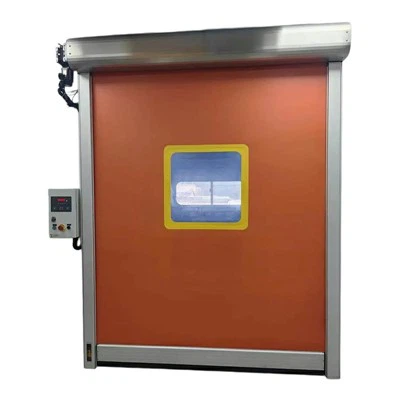
Let’s start with the basics: steel itself. Not all steel is created equal. The doors we build aren’t made from the thin, flimsy sheet metal you’d find on a old storage shed. We use 16-gauge cold-rolled steel for the door slab, and 14-gauge for the frame, because cold-rolled steel is denser, less likely to warp, and holds screws and hardware far better than hot-rolled steel. Some suppliers cut costs by using 18-gauge steel, and while that’s fine for interior closet doors, it’s a disaster for exterior doors or commercial units. I remember a project five years ago where a general contractor used 18-gauge doors for a retail strip mall. Within three years, half the doors had buckled in the summer heat—so hot that the thin metal expanded enough to pull the hardware off the frame. That’s a mistake we never make, and it’s a big reason our doors hold up.
But steel doesn’t last on its own. Rust is the biggest enemy, especially for doors that go on exterior walls, exposed to rain, snow, salt from winter roads, or humidity. That’s why we spend extra time on the pretreatment process before coating. First, every steel slab and frame goes through a phosphate wash to remove oils and mill scale left from the manufacturing process. Then we apply a zinc-rich primer—zinc acts as a sacrificial barrier, meaning it corrodes first instead of the steel underneath. Some suppliers skip this step, spraying primer directly on unwashed steel, and within a year, you’ll see rust bleed through the paint. We also use a powder coat finish instead of liquid paint. Powder coat is baked on at 400 degrees, so it’s harder, more uniform, and doesn’t chip as easily as liquid paint. I’ve had a customer in coastal Florida tell us their powder coat door has stayed looking new for 15 years, even through hurricanes and salt air. Liquid paint would have faded and chipped long before that.
Now, let’s talk about the parts that people interact with every day: hinges, locks, and the weatherstripping around the door. A door is only as strong as its weakest point, right? We use ball-bearing hinges instead of plain metal hinges because they reduce friction, so the door doesn’t sag over time. Sag is a huge issue for many doors—when the frame twists or the hinges wear out, the door doesn’t close right, which lets in water, drafts, and pests. A sagging door can also strain the lock, leading to break-ins or malfunction. We test our doors by opening and closing them 10,000 times during quality control—this simulates 10 years of regular use, and any door that doesn’t pass gets sent back to the shop to adjust the hinges. For locks, we work with commercial-grade deadbolts and lever handles, not the cheap ones you’d buy at a big-box store for $20. Those locks break easily, especially on high-traffic doors like office building entrances or storefronts.
Weatherstripping is another detail that affects both durability and energy efficiency. Many doors come with thin, foam weatherstripping that crumbles after a few years. We use EPDM rubber weatherstripping—this is the same material used in car hoses and seals, so it resists cold, heat, and UV damage. I’ve had a customer in Minnesota report their EPDM weatherstripping is still intact after 10 harsh winters, whereas his old wood door’s foam stripping would turn to mush every 18 months. Good weatherstripping also prevents water from getting behind the door, which is a common cause of rust that people don’t notice until it’s too late.
Of course, durability depends on how the door is installed, too. Even the best steel door will fail if it’s mounted on a warped frame or set in soft concrete. Our sales team always reminds customers to hire a professional installer who knows how to shim the frame properly, level it, and secure it to the wall studs—not just the drywall. We’ve seen customers try to install a steel door themselves, thinking it’s just like hanging a wooden door, and within two years, the door is twisted, the lock is misaligned, and water is leaking into the building. It’s not that the door is bad—it’s that the installation didn’t support the door’s weight. A steel door is heavier than wood of the same size, so it needs a solid, properly installed frame to last.
Now, let’s put a number on it. For residential steel doors, if they’re installed correctly and maintained occasionally (wipe down the weatherstripping, tighten hinge screws once a year), they can last 20 to 30 years. Commercial doors, which get much more use (think a restaurant kitchen door that’s opened and closed 50 times a day, every day), can last 15 to 20 years. I have a commercial client in Chicago that’s used our steel entry doors for their storefront for 17 years—they just recently replaced them not because they were worn out, but because they wanted a new color to match a store remodel. That’s the kind of durability we aim for.
But wait—what about extreme conditions? We’ve tested our doors in temperatures as low as -20 degrees Fahrenheit, where steel can become brittle if it’s the wrong grade, but our cold-rolled steel stays flexible, so it doesn’t crack when someone slams it in the cold. We also test for impact—our doors can withstand a 10-pound object dropped from 10 feet, which is more than enough for a kid’s soccer ball or a shopping cart bump. For hurricane zones, we offer impact-resistant steel doors that meet Florida Building Code standards, so they can withstand wind speeds of up to 150 mph. We installed a set of those in the Florida Keys a few years ago, and they survived Hurricane Ian with barely a scratch—no dents, no water leaks, no rust. That’s the kind of performance that matters when you’re dealing with extreme weather.
A lot of people ask us if a steel door is worth the investment, especially compared to fiberglass or wood. Wood doors need to be sanded and repainted every 3 to 5 years, and they’re prone to warping, rot, and insect damage. Fiberglass doors are nice, but they can crack if something heavy hits them, and they fade over time in direct sun. Steel doors might cost a little more upfront, but when you calculate the long-term cost—no repainting, no repairing rot, no replacing doors every few years—they’re actually more cost-effective. Plus, steel doors have better security; they’re much harder to kick in than wood or fiberglass, which is a big selling point for homeowners and businesses worried about break-ins.
That said, no door is indestructible. If you slam a car into it at 30 mph, it’s going to dent. But dents don’t ruin a steel door—unlike a wood door, a dent in steel can be popped out and repainted, so you don’t have to replace the whole door. A dent in a wood door would need to be filled and sanded, which is more work, and if it’s deep enough, you might have to replace the door. That flexibility is another part of steel’s durability.

At the end of the day, the durability of a steel door isn’t a fixed number—it’s a combination of material, construction, installation, and maintenance. As a steel door supplier, we don’t just sell a slab of metal and a frame. We build a product that’s designed to stand up to whatever the elements or daily use throw at it, and back it up with support for the life of the door. If you’re in the market for a steel door for your home, office, storefront, or industrial space, our team can help you choose the right grade of steel, coating, and hardware to fit your needs and location. We’re happy to walk you through every detail, answer any questions, and make sure you get a door that will last for decades. Don’t settle for a cheap door that will fail in a few years—invest in a steel door built for durability, and reach out to our team to discuss your requirements today.
High Speed Folding Door References:
- American Society of Heating, Refrigerating and Air-Conditioning Engineers. 2020. HVAC Applications Handbook. Chapter 19: Doors and Openings.
- Steel Door Institute. 2018. Standard Specifications for Steel Doors and Frames.
- International Code Council. 2021. International Residential Code for One- and Two-Family Dwellings. Chapter 7: Exterior Walls and Doors.
- National Association of Home Builders. 2019. “Durability of Exterior Door Systems.” Home Building Research Report.
Suzhou Denasi Intelligent Technology Co., Ltd.
As one of the leading steel door manufacturers and suppliers in China, we warmly welcome you to buy discount steel door for sale here from our factory. All products are with high quality and competitive price. Contact us for quotation.
Address: No. 898 Jinsheng Road, Jinjiaba, Lili Town, Wujiang District, Suzhou City, Jiangsu Province
E-mail: ChinaDenas@163.com
WebSite: https://www.densiclean.com/
