If you’ve ever watched protests, riot response drills, or even large-scale public events where crowd control is a must, you’ve probably seen a riot helmet—those tough-looking, matte-finished headsets that look nothing like a standard bike helmet or construction hard hat. As someone who’s been supplying these for over 8 years, I get tons of questions from event organizers, first aid teams, and even small-scale protest groups: what actually goes into building one? It’s not just slapping hard plastic on a head; every part is designed to stop specific threats that regular gear can’t handle, and I’m gonna break it down like I talk to my customers—no fancy industry jargon, just real, practical stuff. Riot Helmet
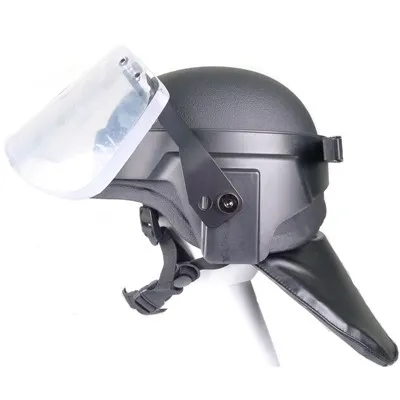
First, let’s start with the shell, the outermost part that everyone sees. Regular hard hats use HDPE (high-density polyethylene) because they’re cheap and good for bumps, but riot helmets need way more punch. The two main materials we use at my shop are polycarbonate alloy and fiberglass-reinforced plastic (FRP). Here’s the difference: polycarbonate alloy is lighter, which matters a ton for officers or volunteers who have to wear it for 12-hour shifts or run drills. It’s also flexible enough to absorb impacts instead of just shattering, so if a rock or a baton hits it, it doesn’t crack and send sharp edges flying. FRP, on the other hand, is way tougher for high-stakes situations—like when there’s actual projectiles being thrown or someone’s swinging a metal pole. It’s heavier, so we only recommend it for long-term deployment, not short events. Either way, the shell isn’t just smooth; it’s curved on purpose, right? We angle the sides so that incoming objects glance off instead of hitting straight on. That’s a small design trick that makes a huge difference—we tested this last year at a riot control training, and a stone that would’ve dented a flat shell slid right off ours. Also, no gloss here—matte finish is non-reflective, so cops or security don’t accidentally catch sunlight and blind someone mid-response. That’s a detail most people miss, but it’s stuff we learn from on-the-ground use, not just lab tests.
Next up: the face shield. This is one of the most important (and most complained about) parts, because no one likes foggy, smudged plastic when they’re trying to see. Standard riot face shields are polycarbonate too, but way thicker than the plastic on your safety glasses—usually 3mm to 5mm, depending on the use. We also add an anti-fog coating on the inside and a scratch-resistant layer on the outside, because nothing kills visibility faster than a shield that gets scuffed from a branch or fogs up when you’re working in 90-degree heat. Wait, and it’s not just a flat sheet—we curve the shield to match the shell, so it fits tight and doesn’t leave gaps around the edges. Those gaps? That’s where pepper spray or rubber bullets can get in, so we use a closed-cell foam gasket around the inner edge of the shield to seal it. Some cheaper suppliers skip that gasket, but it’s a non-negotiable for us. Also, we make two types of face shields: clear for general use, and tinted for events with bright sunlight—again, practical stuff for when people are actually using the gear, not just storing it in a closet.
Now, the suspension system and padding. This is where a lot of helmets drop the ball. If the shell takes the hit, the suspension keeps your head from bouncing around or getting a concussion. Riot helmet suspension is totally different from the stuff in bike helmets, which is designed for crashes at 20 mph. Ours is a 5-point harness system, similar to a car seatbelt, but made of thick nylon webbing that doesn’t fray even if it’s exposed to tear gas or rain. The top padding is expanded polypropylene (EPP), which is the same foam used in car bumpers—super lightweight but absorbent. We also add a thin layer of closed-cell foam along the sides and back of the helmet, because impacts to the temple or back of the head are just as dangerous as a hit to the crown. Wait, and there’s a quick-release buckle on the chin strap—super important in emergencies. If someone panics or gets tangled in something, they shouldn’t have to fumble with a weird clip. Our buckles release with one hand, even if you’re wearing gloves. That’s another thing we picked up from feedback from law enforcement customers—they told us a few people had gotten stuck before, so we redesigned the buckle last year.
Wait, let’s not forget the vents. I know, vents in a riot helmet? It sounds crazy, but if you’re wearing one for hours in hot weather, you’ll sweat through your shirt. But here’s the catch: vents can’t be big enough for objects to get through, or for pepper spray to seep in. So we make mesh vents with fine stainless steel screen, and we put them on the top and sides of the shell—places where projectiles are less likely to hit. We also add flaps over the vents that you can close if you’re in a situation where pepper spray is active. No one likes a steamy helmet, but we’d rather someone be hot than have spray get in their eyes. That balance is what makes our helmets stand out—lots of suppliers either skip vents entirely or make them too big, but we test every vent design with actual pepper spray to make sure it works.
Then there’s the retroreflective tape, which might seem like a tiny add-on, but it’s a lifesaver at night or in low light. When officers are working a night shift, or volunteers are at an event that runs after dark, being visible to other people is super important for safety. We add 1-inch strips of high-intensity retroreflective tape along the back and sides of the helmet—way brighter than the cheap stuff you put on a bike. It catches light from headlights or flashlights, so no one gets run over by a vehicle during a crowd dispersal. A lot of budget suppliers don’t bother with this, but it’s a low-cost upgrade that prevents so many avoidable accidents.
Now, let’s talk about what we don’t do. A lot of suppliers cut corners to lower prices—they use thin shells, no gaskets, flimsy buckles. But at my shop, we never use recycled polycarbonate for the shell. Recycled plastic might be cheap, but it has micro-cracks that make it way more likely to shatter on impact. We use virgin material that’s tested to withstand up to 10 joules of force—That’s the same standard law enforcement uses, so we know it works. Also, we don’t skip the insulation between the shell and the suspension. Some helmets have the suspension glued directly to the shell, but we add a thin layer of neoprene to stop vibrations from transferring straight to your head. If you’ve ever banged your head on a hard surface and felt the rattle for days, you know why that matters.
Wait, let’s mention a few real-world uses to put this in perspective. Last summer, a customer of ours in Portland ordered 200 FRP riot helmets for a protest that got a little heated. They told us that a few rocks were thrown at the officers, and none of the helmets had cracks—something that had happened with a cheaper brand they’d used before. Another customer, a school district, ordered polycarbonate helmets for their security team after a large football game where a crowd got unruly. They said the helmets were light enough that the officers didn’t complain about neck ache at the end of the night, which was a huge win because old heavy helmets had been leading to turnover.

I know a lot of people think riot helmets are just for cops, but they’re used by all kinds of groups: event security, protest organizers, disaster response teams. If you’re putting together a team that needs gear that actually works, not just looks tough, you want to know exactly what’s going into it. Every part of a riot helmet is engineered with one goal in mind: keep the wearer safe, without making it so uncomfortable that they can’t do their job.
Riot Helmet If you’re interested in ordering, or just want to chat about what kind of helmet fits your specific needs (whether that’s a short event with 10 people or a long-term deployment with hundreds), hit me up. I don’t do generic sales pitches—we’ll talk through what threats you’re facing, how many you need, and make sure you get exactly what works for you. No fluff, no hidden fees, just gear that’s built to last.
References
- U.S. Department of Justice. (2020). Riot Control Equipment Standards for Law Enforcement. National Institute of Justice.
- International Organization for Standardization. (2018). Personal Protective Equipment for Against Impact and Penetration. ISO 14879:2018.
- National Safety Council. (2021). Concussion Prevention in Crowd Safety Equipment. NSC Safety Reports.
- Global Security Industry Association. (2022). Best Practices for Riot Helmet Design and Deployment. GSIA Technical Bulletin.
- American National Standards Institute. (2019). Protective Headgear for Security Personnel. ANSI Z89.1-2019.
Jiangsu Jiuan Police Equipment Manufacturing Co., Ltd.
As one of the leading riot helmet series manufacturers and suppliers in China, we warmly welcome you to wholesale bulk cheap riot helmet series from our factory. All customized products are with high quality and low price. For free sample, contact us now.
Address: No. 9, Xihuan South Road, Jingjiang City, Jiangsu Province
E-mail: viola@jiuanpolice.cn
WebSite: https://www.japolice.com/
