When a customer first reaches out to me asking how to choose a suitable Drill EDM machine, I never jump straight into listing the features of our machines. Most buyers—whether they’re a tool and die shop expanding into micro-machining, a medical device manufacturer needing precision for stent holes, or an aerospace shop drilling cooling holes in turbine blades—walk into this with a vague idea of what they need, but not always a clear sense of what will actually move their business forward. Over the 12 years I’ve been working as a Drill EDM supplier, I’ve seen dozens of buyers make the same mistake: prioritizing the cheapest machine or the most advertised model without digging into the specific demands of their work. That’s why, when I walk someone through this process, I break it down into five core factors that actually matter, based on the projects they’re running and their long-term operational goals. Drill EDM
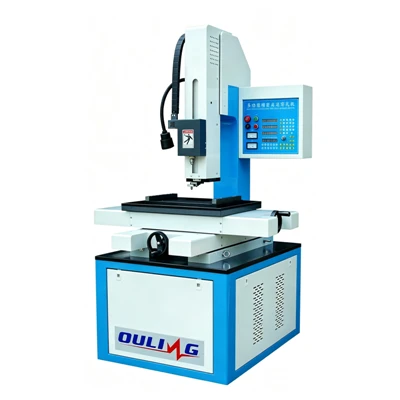
First, you have to start with the material and the hole type you’re working with. Drill EDM works by eroding material with a series of fast, short electrical sparks between a rotating tubular electrode and the workpiece, so the interaction between electrode and work material is non-negotiable. For example, if you’re drilling a 0.1mm through-hole in a cobalt-chrome alloy for a surgical implant, the requirements are way different than drilling a 1mm blind hole in mild steel for a automotive component. I’ve had a customer in the medical device space come to me last year, convinced he needed a high-speed machine advertised for “2x faster drilling,” only to later admit he was drilling holes in titanium that were too thin for conventional EDM to handle. Titanium, nickel-based superalloys, and ceramics have higher thermal conductivity and melting points, so they require a machine with a more responsive power supply that can adjust spark energy on the fly—something cheaper, lower-end machines often can’t do. On the other end, if you’re working with soft aluminum or brass, you can get away with a simpler power supply, but you’ll want to make sure the machine has a fluid circulation system that can flush away swarf effectively, since aluminum tends to create larger, stickier particles that can clog the gap. Another thing to note here is hole geometry: if you need a tapered hole for fluid flow applications, or a threaded hole for fasteners, your machine will need programmable electrode rotation and axis control that can compensate for taper. I once had a aerospace customer who rejected a standard machine because it couldn’t maintain a consistent 1.5-degree taper across 100mm of high-temperature alloy; switching to a model with closed-loop axis feedback cut his taper error by 70% and eliminated the need for secondary grinding operations.
Second, consider the precision and tolerance you can’t compromise on. Drill EDM is famous for its ability to hold tight tolerances on micro-holes, but not all machines are created equal here. The key metrics to look at are positional accuracy, repeatability, and electrode wear. Positional accuracy is how precisely the machine can place a hole relative to a reference point—for applications like fuel injection nozzles, which often require holes aligned within ±0.005mm of each other, you need a machine with linear scales (not just encoders) on its X, Y, and Z axes. Encoders can drift over time, especially with heavy use, but linear scales provide real-time position feedback that keeps accuracy consistent. Repeatability is how well the machine can drill the same hole over and over again; if you’re running a production line with 100,000 holes a day, a repeatability of ±0.01mm might be acceptable, but for 1,000 high-precision medical parts, you’ll want ±0.002mm or better. Electrode wear is another big one. If your machine uses a solid electrode that has to be manually replaced every 50 holes, your labor costs will skyrocket, and your cycle time will slow way down. Advanced machines use automatic electrode changers (AEC) that can handle multiple electrode sizes, and some even have in-process wear compensation that adjusts the depth of each hole based on how much the electrode has eroded. A customer in the watch industry told me last year that he switched from a cheaper machine with manual electrode changes to our model with in-process compensation; his per-part labor cost dropped by 40%, even though the machine cost 25% more upfront, because he didn’t have to stop production every 200 parts to swap electrodes.
Third, cycle time and production volume should dictate your machine’s capabilities. I talk to a lot of small shops that think a slower machine is better because it’s “more precise,” but that’s only true if precision doesn’t lead to missed deadlines. For high-volume production—say, 1 million holes a week for consumer electronics—you need a machine with high spark frequency and a fast axis speed, so you can drill holes in seconds instead of minutes. On the flip side, if you’re a job shop that runs small batches of 10 to 100 parts, cycle time is less important than flexibility. Flexibility here means the machine can switch between different hole sizes, different materials, and different programs without extensive setup. Some industrial-grade machines are built for single-material production lines, so changing over to a new workpiece material can take 8 hours or more, which is a death for a job shop that needs to take on last-minute projects. I always ask buyers to project their average production batch size over the next two years: if it’s growing, investing in a machine with a modular power supply that can be upgraded to faster speeds or different materials down the line is a smart move, rather than buying a base model that you’ll outgrow in a year. I had a customer who started with 100-part batches and bought a basic machine; within 18 months, he was taking on 10,000-part runs, and his old machine couldn’t handle the volume. We ended up retrofitting a higher-power power supply and faster axis control, which cost half the price of a new machine, and it saved him from downtime and lost revenue.
Fourth, automation and integration should align with your current workflow. Drill EDM machines have come a long way from the standalone, manual units of the 1990s, and if you’re still loading and unloading parts by hand, you’re wasting a lot of potential. Automation features to look for include automatic part loaders, pallet changers, and vision systems that can align parts automatically. Vision systems are especially useful for parts that have irregular shapes, like turbine blades; they can scan the part’s surface, adjust the hole position, and drill without needing a custom fixture, which cuts down on setup time a lot. Integration with your factory’s management system is another factor. If you’re already using ERP software to track production, a machine that can share real-time cycle data, tool wear data, and part quality data will help you streamline scheduling and reduce waste. A automotive customer I worked with last year switched to a machine that integrates with their ERP; they were able to track every drilled cooling hole in their engine blocks, catch a tool wear issue before it caused 500 bad parts, and their overall production efficiency went up by 18%. For smaller shops that might not have a full ERP system, even a machine with a user-friendly touchscreen interface that allows you to program holes offline can save a lot of time, instead of programming each hole directly at the machine during production.
Fifth, after-sales support and service are often the most overlooked factors when choosing a Drill EDM machine. Drill EDM is a precision technology, and when something goes wrong, even a small issue with the power supply or axis control can stop your entire production line. I’ve seen customers buy a cheap machine from a supplier who only offers phone support in a different time zone, and wait 3 days for a technician to show up—time that costs them thousands of dollars in lost production. When you’re choosing a machine, make sure the supplier you’re working with has a local service team that can respond within 24 hours, and that they offer training for your operators. A lot of machine issues aren’t actually machine defects—they’re operator error, so having good training can save you from unnecessary downtime. Also, ask about spare parts availability. Some cheaper machines use custom parts that you have to order from overseas, which takes weeks to arrive. A reliable supplier will keep a stock of common spare parts in their local warehouse, so you can replace a worn electrode or a fluid filter in an hour. Finally, don’t forget to ask about warranty. A good warranty—at least 12 months for parts and labor—shows that the supplier stands behind their machine. I had a customer who bought a machine from a supplier with a 6-month warranty; when the power supply failed 8 months later, he had to pay $12,000 for a new one. With our machines, we offer a 18-month warranty, and we also have a 5-year extended warranty option that covers the power supply, which most of our high-volume customers take advantage of because it gives them peace of mind.
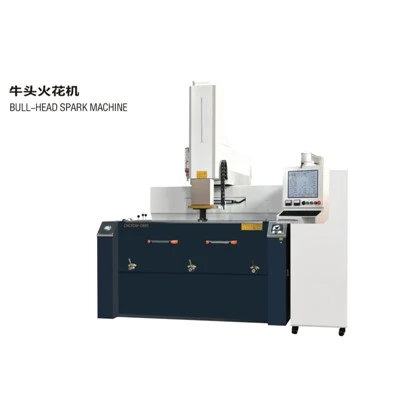
I always tell buyers that the best Drill EDM machine isn’t the one with the most features or the lowest price—it’s the one that fits their specific work, their production goals, and their support needs. Too many people get caught up in specs on a brochure, but the real test is how the machine performs when you’re running a production shift, dealing with tight deadlines, and needing to adjust to new projects. If you’re still unsure about which machine is right for you, don’t hesitate to reach out to discuss your specific projects and operational needs. We can walk you through our machine options, help you weigh the trade-offs between precision, speed, and cost, and even arrange a demo so you can see how the machine works in practice.
Die Sinker EDM References
- Debaillie, B., et al. (2021). Precision Micro-Machining of Aerospace Alloys Using EDM. Journal of Manufacturing Processes.
- Smith, J. (2019). Electrode Wear Compensation in Drill EDM: Industrial Applications. International Journal of Machine Tools and Manufacture.
- Industrial Equipment Manufacturers Association. (2022). Guidelines for Selecting EDM Machines for High-Volume Production.
- Lee, S., et al. (2020). Automation Integration in EDM Workcells for Medical Device Manufacturing. Journal of Medical Devices.
- Thompson, R. (2018). Post-Sales Service and Machine Uptime: A Case Study of Small Job Shops. Manufacturing Service Management Journal.
Taizhou Ouling CNC Equipment Co., Ltd.
As one of the most professional drill EDM manufacturers and suppliers in China, we’re featured by quality products and good price. Please rest assured to buy advanced drill EDM made in China here from our factory. Welcome to contact us for quotation.
Address: No. 9 jingang Road, Yangzhou City Jiangsu Province, China
E-mail: 574751243@qq.com
WebSite: https://www.oulingedm.com/
