As a supplier of fluid film bearings, I get asked all the time: what’s on the horizon for our industry? For decades, fluid film bearings have been the quiet workhorses of heavy machinery—they keep wind turbines spinning, industrial pumps circulating, and paper mills running, all while delivering the smooth, low-friction performance that rolling-element bearings can’t match. But the tech that powers these bearings isn’t standing still. Over the past five years, I’ve seen two major shifts in the emerging technologies shaping what we do, ones that aren’t just incremental upgrades, but game-changers for how our customers design, use, and maintain their equipment. Fluid Film Bearings
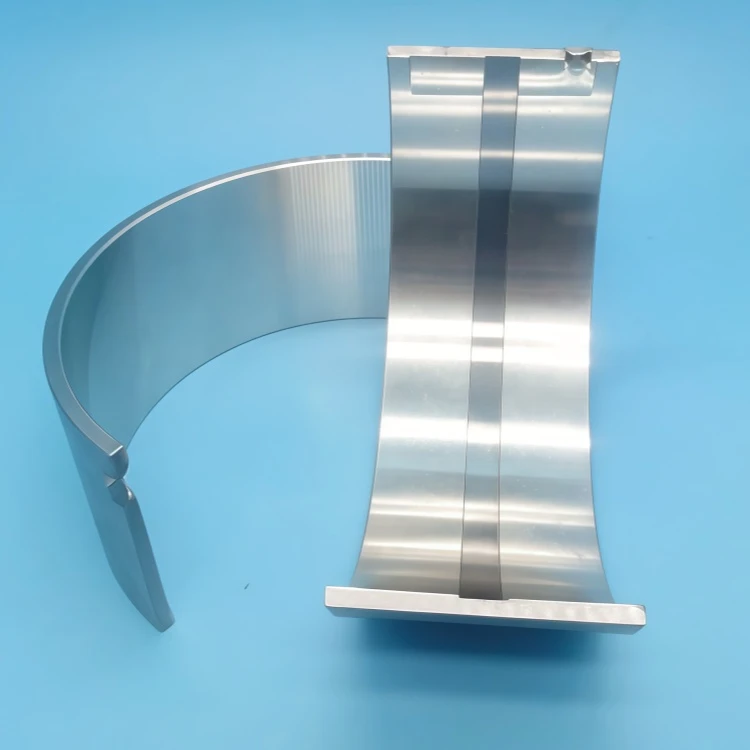
The first shift is all about smart fluid film bearings—bearing systems that collect, analyze, and act on data in real time, no separate sensors required. A lot of people don’t realize that traditional fluid film bearings already generate a steady stream of information: changes in oil pressure, temperature, and film thickness, for example, are early warning signs of wear, misalignment, or contamination. The old way of monitoring meant adding external sensors, which add cost, take up space, and often don’t sit directly where the bearing’s most critical performance is happening. That’s changing fast.
Last year, we started testing a prototype of a smart journal bearing that integrates micro-sensors directly into its surface, embedded during the manufacturing process so they don’t protrude or interfere with the fluid film. These sensors aren’t bulky; they’re thin, flexible, and made from materials that can withstand the extreme heat and pressure of a running bearing. The sensors measure 10,000 data points per second, feeding into a small, on-board processor that turns that raw data into actionable insights. Instead of waiting for a machine to fail and shut down, our customers can get alerts when a bearing’s film thickness drops below a safe threshold, or when oil contamination is starting to degrade performance.
One of our early adopters, a large wind turbine operator, tried these smart bearings on 12 turbines in the North Sea. Before, they would perform manual checks every six months, which meant sending technicians out in rough weather, sometimes missing small issues that led to expensive unplanned downtime. After switching to the smart bearings, they cut unplanned maintenance events for those turbines by 40% in just 10 months. What’s more, the data they collect helps them adjust the turbines’ operation—like tuning rotor speeds to reduce vibration and extend bearing life—something they couldn’t do with older, less precise monitoring. That’s the big difference with these new bearings: they’re not just a part of the machine, they’re a tool for optimizing the whole operation.
The second big emerging tech in our space is surface texturing for fluid film bearings, a process that adds tiny, controlled micro-patterns to the bearing’s surface to improve performance. For years, bearing designers have tried to smooth surfaces as much as possible, thinking less roughness equals less friction. But recent research, and hands-on testing from our team, shows that micro-textures—like dimples, grooves, or grid patterns just a few microns deep—can actually boost load capacity, reduce friction, and even extend bearing life, especially in machines that run at variable speeds or under changing loads.
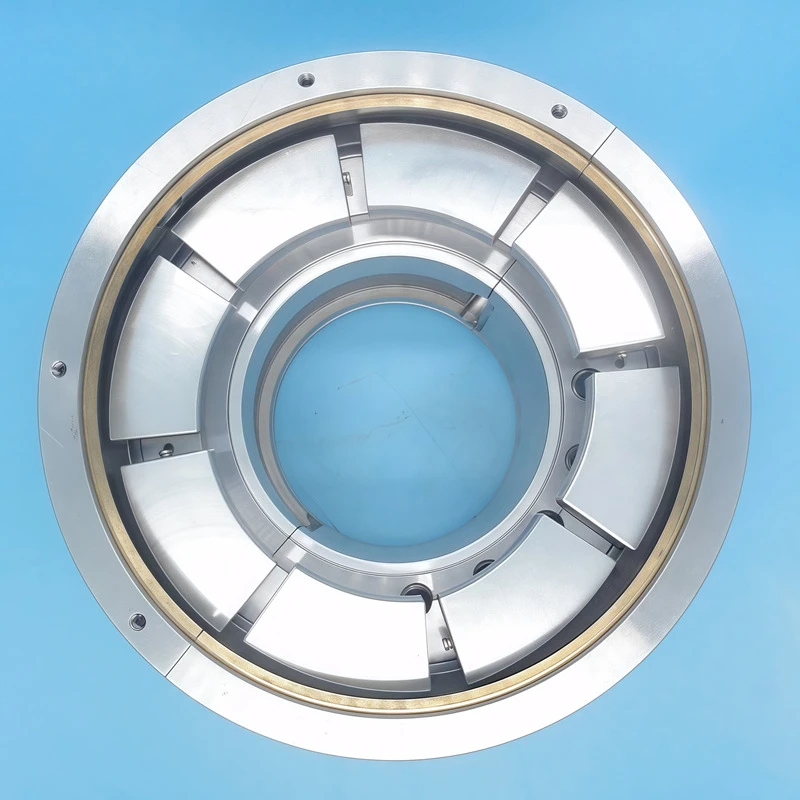
We’ve been testing two types of surface texturing lately: laser-textured surfaces and laser-induced periodic surface structures (LIPSS). Laser texturing is a straightforward process—we use a high-precision laser to etch uniform patterns into the bearing’s sliding surface during manufacturing. Early tests show that a laser-textured thrust bearing for an industrial pump runs 15% cooler than a standard bearing, and has 10% lower friction at low speeds, which is huge for pumps that start and stop frequently. LIPSS is even more advanced: these are nano-scale patterns that form automatically when a laser hits a metal surface, creating structures that are harder to replicate manually. For high-speed applications like gas turbines, LIPSS-textured bearings have shown a 20% improvement in load-carrying capacity, which means we can make smaller, lighter bearings without sacrificing performance—ideal for industries where space is at a premium, like aerospace or electric powertrains.
A common question we get about surface texturing is: won’t those micro-patterns trap debris? It’s a valid concern, but our testing shows that the right pattern size and shape eliminates that risk. Dimples, for example, act as tiny oil reservoirs, keeping the fluid film thicker even when contaminants are present, and they also catch small wear particles before they can scratch the bearing surface. It’s a small design tweak, but it’s been a game-changer for machines that run in dusty or dirty environments, like mining equipment or construction machinery.
Beyond these two technologies, there’s another trend I’m watching closely: sustainable fluid film systems. Customers across every industry are pushing for more eco-friendly solutions, and that’s extending to the fluids that lubricate bearings, and even the materials we use to make the bearings themselves. Traditional mineral-based lubricants are effective, but they’re not biodegradable, and they can be a source of pollution if they leak. New bio-based lubricants, made from vegetable oils or synthetic esters, are now being formulated to match the performance of mineral oils, with lower viscosity and better thermal stability. We’ve partnered with a lubricant manufacturer to test these bio-fluids in our bearings, and early results show that they work just as well, if not better, in low-temperature applications, and they break down naturally if spilled.
We’re also working on bearings made from composite materials, instead of the traditional steel or bronze. Carbon fiber composites, for example, are lighter, corrosion-resistant, and have lower friction than metal, which is perfect for marine applications where saltwater can damage traditional bearings. A shipyard we work with has been testing carbon fiber composite journal bearings for their new fleet of cargo ships, and they’ve cut the weight of each bearing by 30%, which translates to less fuel use and lower operating costs over the ship’s lifecycle.
I’ll be honest: some of these technologies still feel experimental to a lot of our customers. For 30 years, we’ve sold bearings that work a certain way, and changing that means proving value, not just adding tech for tech’s sake. That’s why our team focuses on testing every new technology in real-world conditions, not just lab settings. Last quarter, we installed a smart bearing and a laser-textured bearing in a paper mill’s main press roll, which runs 24/7, 365 days a year. After three months, the mill reported that the bearing’s temperature was 12°F lower than the one it replaced, and they haven’t had to perform an emergency shutdown in that section of the mill in over two months. That’s the kind of proof that wins customers over.
Looking ahead, I think the next five years will bring even more integration between these technologies. Imagine a bearing that has built-in sensors, a laser-textured surface, and is compatible with bio-based lubricants—all designed to work together to deliver maximum performance, minimum downtime, and a smaller environmental footprint. We’re already working on a prototype like that for a wind turbine manufacturer, tailored to their specific needs for off-shore, high-usage environments.
For our customers, the takeaway here isn’t that you need to throw out all your existing fluid film bearings and switch to the latest tech tomorrow. It’s that these technologies are proven, and they offer tangible returns—less downtime, lower operating costs, longer bearing life. If you’re looking to upgrade your machinery, or you’re dealing with frequent bearing failures that are costing you money, talking to a supplier who’s working on these emerging technologies can help you find a solution that fits your needs.
If you’re interested in learning more about how smart bearings, surface texturing, or sustainable solutions can improve your equipment’s performance, don’t hesitate to reach out for a procurement discussion. We’ve worked with companies across industries to customize fluid film bearing systems, and we’re here to help you find the right fit for your operations.
Thin Walled Babbitt Bearings References:
- Stachowiak, G. W., & Batchelor, A. W. (2014). Engineering Tribology. Butterworth-Heinemann.
- Khonsari, M. M., & Booser, E. R. (2018). Applied Tribology: Bearing Design and Lubrication. John Wiley & Sons.
- Laser Surface Texturing for Tribological Applications: A Review. (2021). Journal of Mechanical Engineering, Vol. 67, No. 3, pp. 157-172.
- Smart Fluid Film Bearings: Real-Time Monitoring and Condition-Based Maintenance. (2022). Tribology International, Vol. 171, Article 107568.
- Bio-Based Lubricants for Industrial Bearings: Performance and Sustainability. (2023). Journal of Sustainable Tribology, Vol. 2, No. 1, pp. 45-62.
Wenzhou Zhengbang Bearing Co., Ltd.
We are one of the most professional fluid film bearings manufacturers and suppliers in China. With abundant experience, we warmly welcome you to buy customized fluid film bearings at competitive price from our factory. If you have any enquiry about free sample, please feel free to email us.
Address: Units 1-1 and 3-1, Building 12, Yongxing Nanyuan Small and Micro Enterprise Startup Park, Binhai 2nd Road, Yongxing Subdistrict, Longwan District, Wenzhou City, Zhejiang Province.
E-mail: zbbearing@zbbearing.com
WebSite: https://www.zb-bearings.com/
