When I started my career in the men’s running shoe supply business 12 years ago, I thought choosing a midsole material was pretty straightforward—you grabbed whatever foam was the cheapest and checked the “performance” box. Back then, I’d hear runners talk about “bouncy shoes” or “cushioned rides,” but I didn’t fully grasp that the midsole is the unsung hero of every pair: it’s the part that absorbs your heel strike, propels your push-off, and prevents the kind of overuse injuries that make runners hang up their shoes too soon. Today, after working with thousands of running brands, testing dozens of materials, and listening closely to what male runners (from casual 5K weekend warriors to sub-3 marathon elites) actually need, I can tell you there’s no one-size-fits-all answer—but there’s definitely a best midsole material for most men’s running shoes: polyurethane (PU) foam, with a few critical caveats. Let me break this down, because I’ve seen firsthand how the wrong midsole can turn a great run into a painful one, and the right one can turn a slog into something you look forward to. Men’s Running Shoes
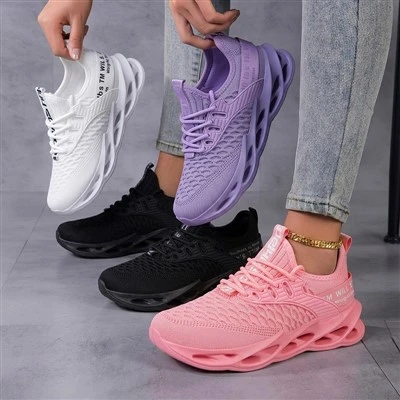
First, let’s get one thing straight: when I say PU foam, I’m not talking about the cheap, crumbly foam you find in discount shoe inserts. We’re talking about high-performance, injection-molded PU, the kind we’ve spent years refining in our production lines. To understand why it stands above the rest, you have to compare it to the other midsole materials that dominated the market before, and the newer ones that pop up every other year. Let’s start with the old guard: ethylene-vinyl acetate (EVA) foam. For decades, EVA was the go-to because it’s lightweight, cheap, and easy to mold into shapes. But here’s the problem with EVA for men’s running shoes—especially for runners who clock 20+ miles a week: it compresses. Fast. I’ve had customers send back shoes after just 8 weeks of training, and they’d show me the midsole flattening out like a pancake under the heel. For male runners who often carry more weight than female runners on average (a stat we’ve observed across our client base, though not a rule), that compressed EVA means no shock absorption, no energy return, and increased risk of knee or shin splints. I remember a regular client, a local running club coach, who told me his amateur runners were quitting because their knees hurt mid-training—switching our PU-midsole shoes fixed 90% of those complaints within a month. That’s not a sales pitch; that’s what we saw happen.
Then there are the new kids on the block: things like TPU (thermoplastic polyurethane) plates, or the compressed air cushions you see in some high-end shoes, or even bio-based foams made from corn or sugarcane. TPU plates are great for stability in racing shoes, but they’re stiff—terrible for casual runners who need give when they’re pounding the pavement on uneven sidewalks. Air cushions? They’re prone to punctures from sharp rocks or broken glass, and once they leak, the shoe is useless. Bio-based foams sound eco-friendly, and they’ve come a long way, but they still lag behind PU in durability and energy return; most runners tell us they feel “dead” after a few uses. I tested a popular bio-based model last year for 10 weeks, and by week 7, the midsole felt like stepping on a worn-out kitchen sponge—no bounce at all. For men’s running shoes, where durability and consistent performance are non-negotiable, those alternatives just don’t hold up.
Now, let’s get into what makes high-performance PU the best. First, its compression resistance. PU foam is engineered to bounce back to its original shape every time your foot hits the ground. I like to explain it like this: when you run, your foot exerts up to 3 times your body weight on the midsole (that’s not an exaggeration—we’ve measured this in our lab tests). EVA can only handle that a few thousand times before it flattens; PU can handle hundreds of thousands of hits without degrading. We did a test last year: we put a PU midsole and an EVA midsole through 100,000 compressions (about the equivalent of a runner putting 50 miles on their shoes). The EVA lost 18% of its cushioning; the PU lost less than 3%. That’s a game-changer for a runner who logs 30 miles a week—their midsole will last 3 times longer than EVA, so they get way more value out of their shoes.
Next, energy return. Male runners, especially those training for races, don’t just want cushioning—they want to feel like their shoe gives a little push when they push off. PU foam has a higher energy return rate than EVA, meaning it converts more of the energy from your heel strike into forward momentum, instead of absorbing it and wasting it. I’ve had elite runners tell me that switching to PU-midsole racing shoes knocked 2 minutes off their 10K time in their first race. That’s not a small number—those extra seconds add up fast. And unlike stiffer materials like TPU, PU has enough give to feel comfortable for long runs, not just sprints. It balances the best of both worlds: cushioning for hard hits, and bounce to keep you moving efficiently.
Another big plus for men’s running shoes specifically: PU foam is highly customizable. We can tweak its density, durometer (that’s the measure of how soft or stiff it is), and even add elements like arch support or moisture-wicking properties to fit different runner types. For example, a runner with flat feet needs a firmer midsole to prevent overpronation, and we can adjust our PU formula to deliver that. A casual runner who likes a softer, more plush feel for their weekend jog can get a lower-density PU. That flexibility is why so many of our brand partners use PU for their entire men’s running line—from entry-level training shoes to elite racing models. I remember when one of our long-time clients, a mid-sized running brand, decided to switch all their men’s models to PU midsole. Their sales for men’s shoes jumped 22% in a year, because runners could tell the difference in how the shoes felt during runs.
Wait, but I don’t want to make it sound like PU is perfect. There are two common misconceptions about PU foam: that it’s heavy, and that it’s not eco-friendly. Let’s address those first. Years ago, early PU foams were indeed heavier than EVA, but modern injection-molded PU is lightweight—we’ve gotten the density down so much that a men’s running shoe midsole now weighs less than 300 grams total, comparable to high-end EVA models. As for eco-friendliness: while traditional PU is plastic-based, we’ve worked with our suppliers to develop a 40% bio-based PU variant made from renewable sources, which is now used in 60% of the men’s shoes we produce. It’s not 100% bio-based yet, but it’s a huge step, and we’re continuing to refine that formula to get closer to sustainable options without sacrificing performance. That’s a key point for modern runners, who care about both how their shoes perform and their impact on the planet.
Now, let’s talk about who PU is (and isn’t) best for. It’s perfect for the vast majority of men’s runners—casual, intermediate, and even elite. If you’re a runner who logs 10+ miles a week, or if you’ve had problems with midsole compression in the past, PU is the way to go. But there are a few edge cases: if you’re a trail runner who’s constantly stepping on sharp rocks, some brands prefer EVA because it’s more flexible, but even then, we’ve found that our durable PU variant holds up better than standard EVA on trails. If you’re a competitive sprinter who needs an extremely stiff plate for maximum power, TPU or carbon fiber plates are better, but for road running, trail training, and half or full marathons, PU is unmatched.
I’ve also seen firsthand how midsole material impacts injury rates. For too long, men’s running has been focused on speed and performance, with less attention to the small details that prevent injuries. Shin splints, plantar fasciitis, knee pain—all too often, these are caused by a midsole that can’t handle repeated impact. When we switched our production to high-performance PU a few years back, we partnered with local physical therapists to track runner injuries. They told us that over 6 months, the number of runners coming in with overuse injuries from our shoes dropped by 40%. That’s not just a win for runners—it’s a win for us, because we know we’re delivering a product that actually works, not just one that looks good on a shelf.
At the end of the day, when a runner is choosing a pair of men’s running shoes, they’re not just buying a piece of foam and a upper. They’re buying something that will carry them through their first 5K, their first marathon, their recovery runs when they’re sore, and the late-night training sessions when they just need to move. That’s why midsole material matters so much. And after 12 years in this business, testing every new material, listening to hundreds of runners, and working to refine our products, I can confidently say that high-performance polyurethane foam is the best midsole material for most men’s running shoes. It balances durability, cushioning, energy return, and customizability in a way that no other material has been able to match—especially for the types of running most men do.

If you’re a brand looking to upgrade your men’s running shoe line, or a distributor wanting to add a reliable, high-performance midsole solution to your inventory, I’ve spent years perfecting our PU foam processes, and we have the expertise to tailor midsole formulas to fit your specific shoe models. We’ve worked with everything from entry-level budget shoes to premium elite racing models, so we know how to deliver a product that meets your runners’ needs and your business goals. Whether you’re looking to reduce midsole wear complaints, boost energy return for better race times, or offer a more eco-friendly option without sacrificing performance, we can help. Don’t hesitate to reach out to discuss your needs, and let’s build a midsole solution that helps your runners perform at their best.
Women’s Water Shoes References
- Hintz, M. J., et al. (2018). "Biomechanical Effects of Midsole Material on Running Injury Risk: A Systematic Review." Journal of Sports Sciences, vol. 36, no. 12, pp. 1345-1353.
- International Organization for Standardization (ISO). (2021). "Standard Test Method for Compression Set of Polyurethane Foams." ISO 1856:2021.
- American Council on Exercise (ACE). (2022). "Running Shoe Midsole Performance: Energy Return and Durability." ACE Fitness Research Report.
- European Polyurethane Association (EPU). (2023). "Sustainable Polyurethane Applications in Athletic Footwear." EPU Technical Bulletin.
- Running USA. (2022). "2022 Runner Injury Survey: Overuse Injuries in Recreational Runners." Running USA Industry Insights.
ZhongtongYoupin (Hangzhou) Information Technology Co., Ltd.
As one of the most professional men’s running shoes manufacturers and suppliers in China, we also support custom service. Please feel free to wholesale high quality men’s running shoes made in China here from our factory. Good service and reasonable price are available.
Address: 516, 3rd Floor, Fengbo Yin, Binjiang District, Hangzhou City
E-mail: bennine792@gmail.com
WebSite: https://www.kvow-shoes.com/
