Hey folks, let’s cut to the chase. If you’re in the PMMA (polymethyl methacrylate) manufacturing or processing space, you know how tricky that exhaust gas stream can be. Those fumes aren’t just stinky—they’re loaded with volatile organic compounds (VOCs), unreacted monomers, and tiny particulate matter that’ll clog up your equipment, tank your emissions compliance, and even hit your bottom line if you don’t treat ’em right. As a PMMA exhaust gas treatment equipment supplier, I talk to plant managers, process engineers, and maintenance leads every week who’re missing a key variable here: air flow rate. It’s not just a “set it and forget it” number—mess it up, and your treatment system’s performance goes right out the window. I’ve seen firsthand how small tweaks (or big blunders) in air flow rate can make or break a system, so let’s break this down like we would in a shop floor huddle. PMMA Exhaust Gas Treatment Equipment
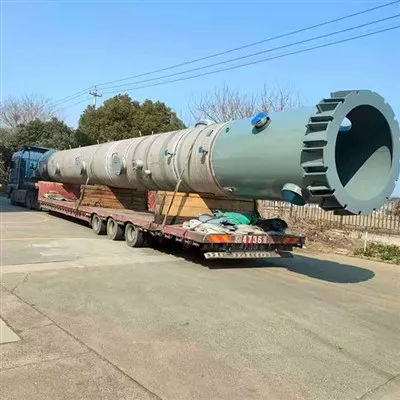
First, let’s get on the same page about what air flow rate even means here. For PMMA exhaust, that’s the volume of gas your system pulls through per minute (or hour, depending on how we measure it)—usually in CFM (cubic feet per minute) or m³/h. It’s tied directly to how much exhaust your PMMA process is spewing out, but it also controls how that exhaust moves through your treatment gear, whether that’s a scrubber, thermal oxidizer, carbon adsorber, or some hybrid setup. A lot of people guess: “Oh, just crank the fan as high as I can to get rid of fumes fast” or “Crank it low to save energy”—but neither is right for PMMA-specific exhaust.
Let’s start with the good side: when air flow rate is dialed in just right for PMMA treatment. PMMA exhaust isn’t like generic industrial fumes—it’s got methyl methacrylate (MMA) monomer, the main culprit here, right? MMA is volatile, has a low odor threshold, and is super reactive. If your air flow rate is matched to your process’s exhaust output, a few great things happen. First, you’re not overloading your treatment media. Take carbon adsorption, for example, which is super common for PMMA small to mid-sized operations. Activated carbon’s got a fixed pore capacity for capturing VOCs like MMA. If your air flow rate is at, say, 500 CFM for a process that puts out exactly 500 CFM, each molecule of MMA has enough time to stick to the carbon pores instead of zipping through with the gas stream. I had a customer last year—small injection molder making PMMA spectacle lenses—who was running at 800 CFM when his process only put out 450 CFM. We tuned it down to 450 CFM, and his carbon’s replacement schedule went from every 6 weeks to every 14 weeks. That’s a huge cost save on media, no drop in compliance.
Then there’s thermal oxidation, which is used for bigger PMMA plants that need to break down VOCs into CO₂ and water vapor. For that, you need the gas to stay in the combustion chamber long enough to burn completely. That’s called residence time, and it’s directly tied to air flow rate. If you run too high, residence time plummets. I once worked with a PMMA sheet extrusion plant that had their thermal oxidizer set to 1,200 CFM when their chamber was sized for 800 CFM. Their MMA destruction efficiency dropped from 99.5% (which is EPA compliant for most industrial sites) to 97.2%—just enough to get them a $12k violation from their state’s environmental agency. Cranking that flow down to 800 CFM got their destruction efficiency back up to 99.7% overnight, no new parts, no extra fuel cost. That’s a real win.
But wait, before you think “low air flow is always better”—no, that’s a myth. For one, if you run flow too low, you might not capture all the PMMA exhaust in the first place. A lot of plant hoods (the stuff that pulls fumes off your extruder or injection molder) are calibrated for a specific flow rate. If you drop it too low, the hood doesn’t pull hard enough—fumes escape into the plant air, which means your treatment system’s not even dealing with the full exhaust load. I had another customer, a PMMA pipe manufacturer, who’d turned his fan down to 300 CFM to save electricity. The problem? The fumes from his extrusion die were floating right up and hitting his face while he checked part quality—he didn’t even notice his treatment system was missing 20% of his emissions. Cranking it back up to 600 CFM (what the hood was rated for) fixed that fume leak, and his system’s treatment rate jumped instantly.
Also, too-low air flow can cause issues with the treatment media itself. For wet scrubbers, which get rid of water-soluble PMMA fumes like MMA, low flow means the gas doesn’t mix well with the scrubbing liquid (usually water or a mild caustic solution). The gas just bubbles through the liquid instead of being dispersed into tiny droplets, so only a small fraction of the MMA gets captured. I’ve seen scrubbers with flow rates 30% below spec have capture rates of 60% instead of 90%—way under what’s needed to keep emissions clean. And for particulate matter in PMMA exhaust (tiny plastic bits from grinding or cutting operations), low flow lets particles settle in the ductwork before they even reach the treatment system, clogging elbows and fans. That leads to pressure buildup, which makes your whole system work harder, wasting the energy you thought you were saving by dropping flow.
Now, let’s talk about the tricky part: how air flow rate interacts with PMMA-specific impurities that a lot of generic treatment suppliers don’t account for. PMMA exhaust isn’t just MMA—sometimes it has residual acrylic acid, methacrylic acid, or even small amounts of oligomers (long-chain molecules that don’t evaporate but get carried over). Those oligomers are sticky, right? If your air flow rate is too high, the gas moves so fast that those oligomers slam into the duct walls or treatment media, building up a gunk layer. That gunk reduces the efficiency of your carbon, clogs scrubber nozzles, and even strains fans. I had a customer who ran a PMMA recycling line; his carbon adsorber was getting clogged every 8 weeks, but when we adjusted flow rate to keep gas speed at 1,200 fpm (feet per minute) instead of his old 1,800 fpm, the clogging went away, and his carbon lasted 20 weeks. That’s not a generic tip—we tested this specifically for PMMA oligomers, because other plastic exhaust (like polyethylene) doesn’t have the same sticky oligomer profile.
Another point: process upsets. PMMA operations aren’t constant—you’ll have startup/shutdown cycles, batch changes, maybe a machine glitch that spews extra exhaust. If your air flow rate is fixed (no variable speed drive, VSD), you’re either under-treating during upsets or wasting energy during normal runs. VSDs let you adjust air flow rate in real time, which is a game-changer for PMMA. For example, when my customer’s PMMA injection molder starts up, it puts out 2x the normal exhaust for the first 10 minutes. With a VSD, they bump the flow rate up to handle that spike, then drop it back down during steady production. Without a VSD, they’d have to keep flow high all the time, burning extra electricity, or keep it low and miss the exhaust spike during startup. We recommend VSDs for every PMMA treatment system we sell—they let you tie air flow rate directly to your process’s real-time emissions, so you never overspend or underperform.
Wait, let’s clear up a common mistake people make: mixing up air flow rate with “exhaust volume.” Your process will specify a certain exhaust volume (e.g., “our extruder puts out 500 CFM when running steady, 1,000 CFM during startup”)—that’s not the air flow rate you set on your system. Air flow rate is the actual volume of gas moving through your treatment equipment, which is affected by duct size, fan size, filter clogs, etc. So even if your process’s exhaust is 500 CFM, if your duct is too narrow or your fan’s wearing out, your actual flow rate might be 350 CFM—so you have to measure it, not just rely on process specs. I tell every customer to do a flow test at least twice a year (more often if they have frequent process changes) because duct clogs, fan wear, or new equipment can shift flow rate without them noticing.
Let’s get real about costs, too—this isn’t just about compliance, it’s about your bottom line. A lot of plant managers see air flow rate as an energy cost, so they prioritize that over performance. But the opposite is true: bad air flow rate leads to higher costs from media replacement, maintenance, and compliance fines. Let’s do a quick math check: a 1,000 CFM PMMA thermal oxidizer. If you run at 1,200 CFM (too high), your fuel cost goes up 15% because you’re heating extra gas, your destruction efficiency drops 2%, and you risk a $10k+ fine. If you run at 800 CFM (too low), you have fume leaks, media clogs every 6 weeks, and $2k/year in extra media costs. Run at 1,000 CFM (just right), you get 99.7% destruction efficiency, media lasts 12 weeks, and fuel cost is only 5% above minimum. That’s a no-brainer for most operations.
Now, I know what some of you are thinking: “I already have a treatment system, do I need to mess with my air flow rate?” Maybe not, but if you’re dealing with emissions issues, high maintenance costs, or frequent compliance checks, it’s worth a look. As a PMMA exhaust treatment supplier, we don’t just sell equipment—we help people dial in their variables, because PMMA’s exhaust is unique, and generic settings never work. For those of you looking to upgrade or optimize your system, we can do a free flow test (no strings attached, promise) to check what your current rate is, and how to adjust it to match your specific process. We also build systems with VSDs and PMMA-specific media that’s designed to handle the sticky fumes and oligomers that other equipment doesn’t account for.
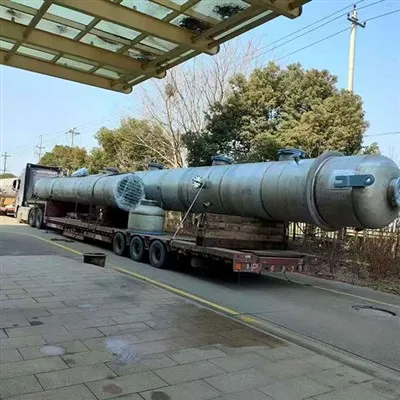
At the end of the day, air flow rate isn’t just a number on a fan dashboard—it’s the bridge between your PMMA process and your treatment system. Mess with it too high, and you waste energy, damage media, and risk fines. Mess with it too low, and you miss emissions, clog ductwork, and let fumes hurt your workers. I’ve seen too many PMMA operations burn money because they didn’t pay attention to this variable, and too many thrive once they dial it in right. If you’re tired of playing guessing games with your exhaust treatment, or if you want to make sure your current setup is running as well as it can, hit us up to connect and chat through your needs. No jargon, no sales pitch fluff, just straight talk about what works for PMMA exhaust.
PMMA Exhaust Gas Treatment Equipment REFERENCES
- Industrial Ventilation: A Manual of Recommended Practice for Design, American Conference of Governmental Industrial Hygienists (ACGIH), 2022.
- VOC Emissions Control for Polymer Manufacturing Processes, U.S. Environmental Protection Agency (EPA), Publication No. EPA/452/R-19/005, 2019.
- Activated Carbon Adsorption of Methyl Methacrylate: Kinetic and Capacity Studies, Journal of Environmental Engineering, Vol. 146, No. 6, 2020, pp. 04020057.
- Thermal Oxidizer Performance Variables for Specialty Polymer Exhaust, Proceedings of the International Conference on Industrial Air Pollution Control, 2021, pp. 112-118.
Wuxi Quansheng Industrial Equipment Co., Ltd.
As one of the most professional PMMA exhaust gas treatment equipment manufacturers and suppliers in China, we have world-leading production equipment and strong manufacturing capabilities. Welcome to buy high quality PMMA exhaust gas treatment equipment for sale here from our factory. For price consultation, contact us.
Address: No.10, Fulaiqiao Road, Hudai Town, Binhu District, Wuxi City, Jiangsu Province, China
E-mail: 397293586@qq.com
WebSite: https://www.pmmatech.com/
